
How to Paint a Garage Floor with White Knight Ultra Pave

Is your garage floor looking a little worse for wear? Learn how to paint your garage floor with White Knight Ultra Pave
A fresh coat of paint can make a big difference, transforming tired concrete into a clean, durable surface that's ready for everyday use.
We've teamed up with Glen the Painter to show you how to paint a concrete garage floor using White Knight Ultra Pave Heavy Duty Garage Floor Paint.
From cleaning and etching to applying the final coat, here's how to get a great result. And as Glen reminds us, the secret is all in the preparation!
- White Knight Ultra Pave Heavy Duty Garage Floor Paint
- White Knight Ultra Pave Concrete Etcher
- Concrete degreaser
- Mineral turpentine
- Paint stirrer & paint scraper
- Pressure washer and stiff bristle broom
- Plastic watering can
- Bucket
- Painter's tape (optional)
- Paintbrush, roller, roller sleeve and paint tray
- Suitable protective equipment
How to Paint Your Garage Floor
First, check that your garage floor is suitable for application of Ultra Pave garage floor paint, as this product must be used on unsealed surfaces only.
Check that there in no clear seal present by applying a small amount of water. If the water seeps into the concrete it is not sealed & White Knight is suitable. If the water remains pooled on the surface, the seal must be removed before continuing.
Ensure your surface is sound before painting. Mend any crumbling concrete, and remove any flaking paint if your floor is prepainted.
1Clean and Degrease

Before painting your concrete garage floor, it's important to remove any dirt, oil and grease that could affect paint adhesion.
Start by applying a suitable concrete degreaser and scrub with a stiff bristle broom to remove all oils, grease, dirt & contaminants that could effect adhesion. Remove any raised areas using a paint scraper or sand paper.
Once clean, give the floor a thorough pressure wash to remove any remaining contaminants.
Make sure your concrete is clean before moving on to the next stage.
Glen's tip: Don't rush the preparation! Any grease or dirt left behind can prevent the paint from bonding properly.
2Sealer Test

Etching helps create a slightly rough surface that allows the paint to adhere properly, reducing the risk of peeling or premature coating failure.
Mix 1kg etcher with 10L of warm water and stir thoroughly. Then distribute evenly over the concrete using a plastic watering can.
Scrub thoroughly with a stiff-bristle broom. You should see the etcher bubbling, which means the reaction is working to roughen the concrete. If it doesn’t bubble, the solution may be too diluted.
Lightly sprinkle with water if required to maintain moistness.
Leave for 10mins, then rinse thoroughly with clean water using a pressure washer.
Allow the concrete to dry completely before painting.
3Etch the Concrete

Once your concrete is clean, dry and properly prepared, it's time to start painting!
For bare concrete, thin the first coat with 10% mineral turpentine. Separate out enough paint for your first coat into a separate bucket and mix in the mineral turpentine.
Start by cutting in around the edges with a paintbrush. Apply painters tape if required.
Use a roller to apply the paint evenly across the floor. Apply a generous amount of paint to the roller, and complete in overlapping strokes to ensure full coverage.
The first coat will look a little thin & wont achieve full coverage. The first coat is thinner to ensure proper adhesion to the surface, while the second coat will deliver full coverage.
Glen’s tip: Work backwards towards your exit so you don't paint yourself into a corner!
4Apply the First Coat

Allow the first coat to dry for at least 16 hours before applying the second coat, depending on drying conditions.
Unlike the first coat, the second coat is applied without thinning to achieve full coverage and a durable finish.
Use your brush and roller to apply an even coat across the entire floor.
Once finished, allow at least four days before light foot traffic and a minimum of seven days before parking vehicles on the surface.
5Apply the Second Coat

Final result
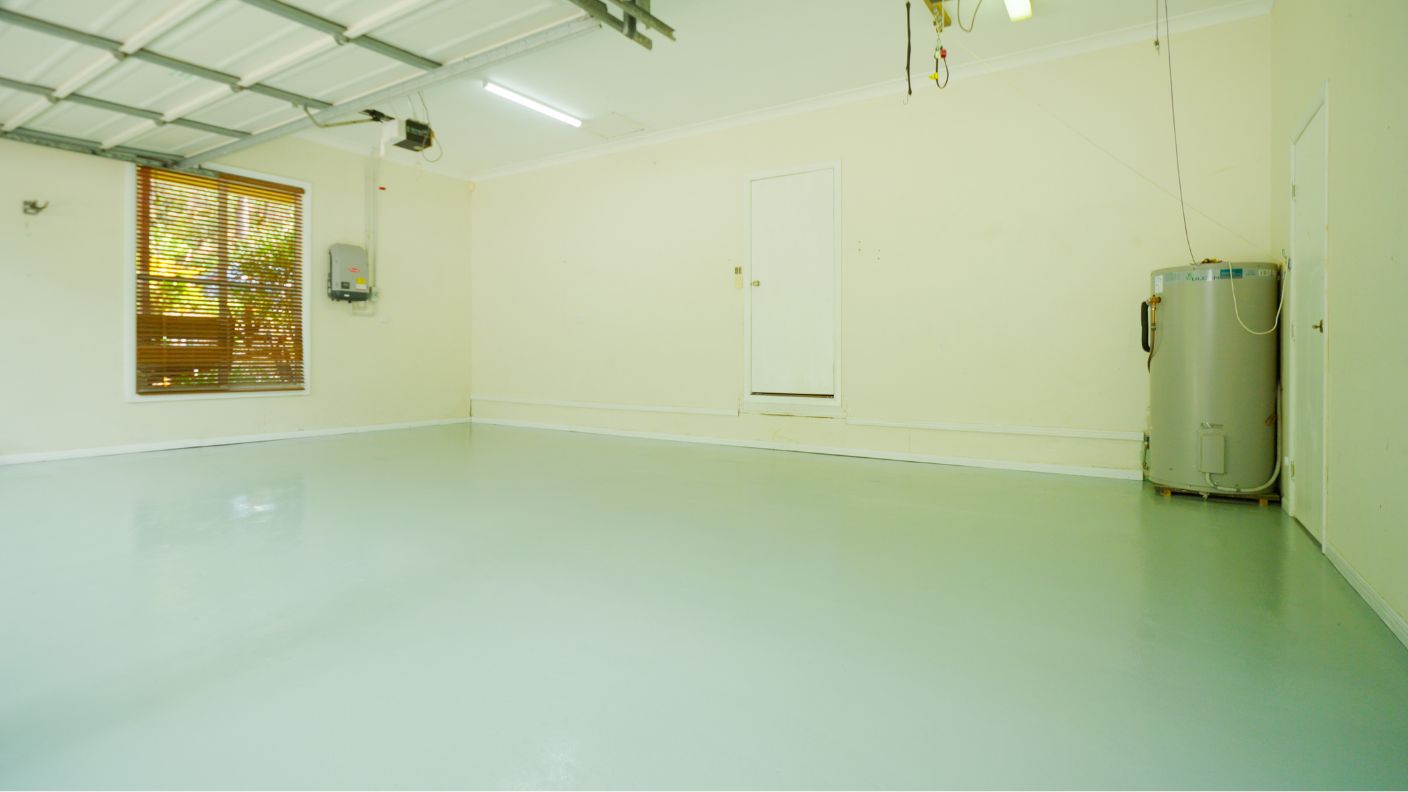
And there you have it! With two coats of White Knight Ultra Pave Heavy Duty Garage Floor Paint, your garage floor has a fresh new look and a tough, hardwearing finish that resists oil, grease and hot tyre pick-up.
As Glen demonstrates, the key to achieving a great result is proper preparation. Clean, degrease, etch and paint, without skipping any steps!
Frequently Asked Questions
Why Choose White Knight Ultra Pave?
White Knight Ultra Pave Heavy Duty Garage Floor Paint is designed to give concrete surfaces a durable, long-lasting finish.
Key benefits include:
Tough, hardwearing finish with DuraTough® technology.
No separate primer required on properly prepared concrete.
Resists oil, grease and hot tyre pick-up for everyday garage use.
Suitable for bare and previously painted concrete, including garage floors, carports and driveways.
Do I need to prime my garage floor before painting?
No. White Knight Ultra Pave Heavy Duty Garage Floor Paint doesn't require a separate primer on properly prepared concrete. However, cleaning and appropriate surface preparation are essential.
Do I need to etch concrete before painting?
Bare concrete should always be etched before painting to create a suitable surface for paint adhesion. This helps prevent peeling and premature coating failure. However, if your concrete had paint on it previously and the paint is still in sound condition, you do not need to etch.
How long before I can park my car on a painted garage floor?
Allow a minimum of seven days after painting with White Knight Ultra Pave Heavy Duty Garage Floor Paint before parking vehicles on the surface.
How do I prevent hot tyre pickup from my car?
Proper preparation is the key to strong adhesion and a durable finish. Remove all oil, grease and contaminants, then etch bare concrete so the paint has something to grip. Thin the first coat with 10% mineral turpentine so it penetrates fully into the concrete (if you're using Ultra Pave Quick Dry Paving & Concrete Paint, thin with water instead). Finally, allow at least seven days before parking your car on the floor.
Ready to Transform Your Garage Floor?
Painting your garage floor is a rewarding DIY project that can make a big difference to your space.
Watch Glen the Painter's step-by-step video to see the transformation in action, and explore the White Knight Ultra Pave range to get started on your own garage makeover.
White Knight Ultra Pave Products


